
There are several types of malocclusion and crossbite is one of it. This is a common problem in the world of dentistry and many dental professional also call it reverse bite. This particular type of malocclusion is detected when the teeth in the upper row overlap with those in the lower one. In a correct bite the teeth in the upper row bite a little outside the teeth in the lower row. Thus crossbite is a phenomenon that occurs opposite to that of a correct bite. It is important to mention that a crossbite may affect a single tooth as well as several teeth or every teeth.
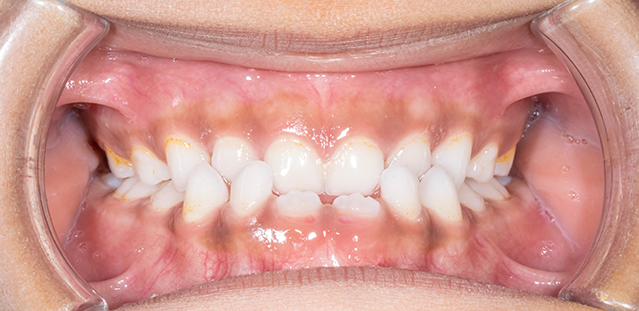
Crossbite is found to be of various types; this categorisation is primarily done based on the location of the mouth where the problem of malocclusion occurs or where it originates from. In the following section of the blog post a leading dentist in London working at the renowned Thousand Smiles Dental Clinic explains different types of crossbite problem that are commonly seen.
A problem of crossbite can again be divided into three categories, namely anterior crossbite, posterior crossbite and unilateral or bilateral crossbite.
An anterior crossbite has the problem area surrounding the incisors or the front of the mouth. Since the problem area is at the front of the mouth, this type of crossbite problem is most easily visible compared to the rest.
As the name posterior crossbite indicates, this type of crossbite or malocclusion of the teeth occurs at the back of the mouth. In this type of malocclusion problem mostly the premolar and the molar teeth are affected. And obviously as the problem occurs at the back of the mouth or in the posterior teeth the malocclusion is much less visible compared to anterior crossbite.
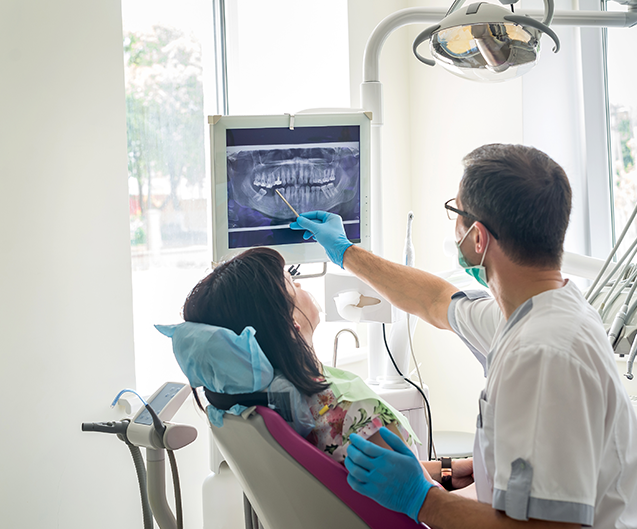
A unilateral crossbite is said to occur when malocclusion affects only one side of the mouth – either the left or the right. A dentist based in London who quotes reasonable price for crossbite treatment says this type of malocclusion problem can create asymmetries in the face. In this category of patients the jaw is usually found deviated to the side of the malocclusion or crossbite.
A bilateral crossbite, unlike the unilateral one, affects both sides of a patient’s mouth. In easier words in this category of cases the teeth of the upper row are found to be located inside the teeth of the lower row on both sides of the mouth.
In the sections above we have just discussed different types of crossbite based on the location of malocclusion. In this section of the post let us discuss various types of crossbite cases based on the origin of the malocclusion.
A skeletal crossbite occurs as a result of abnormal development of the bone. In this type of cases the upper jaw is not properly developed and therefore is smaller than the lower jaw. This allows the teeth of the upper jaw remain inside the teeth of the lower jaw.
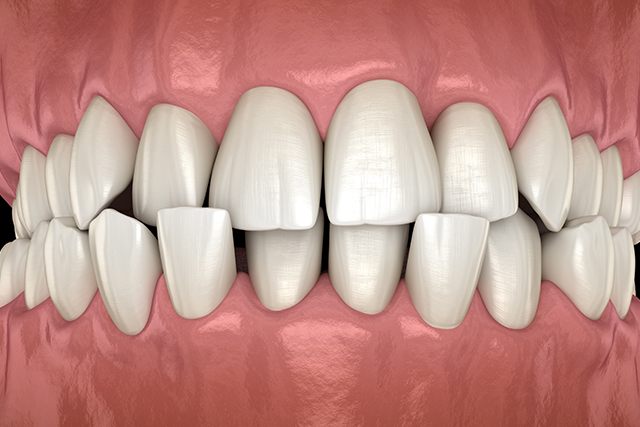
In this type of crossbite cases the malocclusion occurs not because of an underdeveloped jaw but rather because of wrong position of the teeth. In other words you can say this type of crossbite cases occurs because the teeth come through at the wrong positions of the jaws.
This is another type of crossbite issue whether the bones have not correctly developed and neither that teeth have erupted normally. In other words the malocclusion in this type of cases occurs because of mixed reasons and hence it is called mixed crossbite explains a dentist who quotes reasonable cost for crossbite treatment.
There can be various causes behind a crossbite problem but by and large these cases can be broadly divided into two categories – namely acquired habits and genetic factor.
When correctional measures are concerned for crossbite problem, dentists rely much on orthodontic appliances braces. Braces prove to be an effective tool to correct crossbite for patients who are still in their childhood or early teens when their jaws have not matured yet and are rather growing. However it is important to note that treatment for crossbite is never too late to start. Modern orthodontic dentistry has effective solutions to this problem for both children and adults. However the treatment may be required in phases and tooth extraction may also be necessary in the process for both children and adult patients. In complicated cases of crossbite even dental surgery cannot be ruled out although such cases are quite rare. Usually a maxillofacial surgeon performs this kind of surgeries.
As far as crossbite symptoms and treatment options are concerned it is important to note that a patient’s age along with the type and the cause of crossbite are taken into consideration before dentists recommend any solution. Usually there exist six treatment options which include the following –



