
People usually ignore dental abnormalities, until and unless a problem causes sufficient discomfort and disrupt their usual normal life. On the other hand there are quite a number of such abnormalities that usually go unnoticed and obviously remain untreated. This happens simply because of the reason that people are not much conscious about those issues. As far as the UK is concerned one such issue is that of crowded teeth. In simpler words this particular problem arises when the teeth inside an individual’s mouth fit in the way those are supposed to. As a result the teeth end up as twisted, bunched up and overlapped.
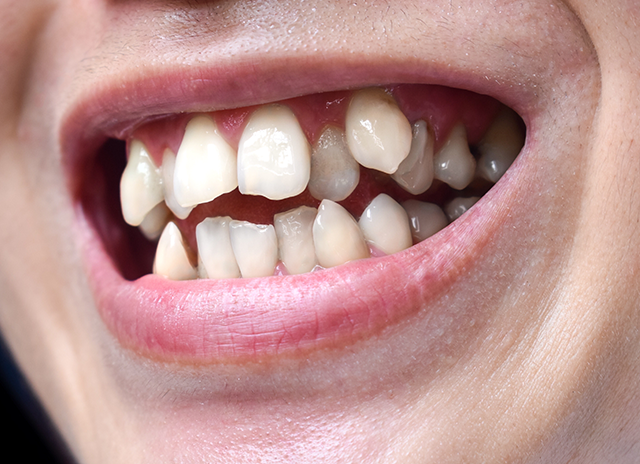
Maintaining standard oral hygiene with crowded or overlapped teeth is practically next to impossible explains a dentist having years of experience in handling such cases at the renowned Thousand Smiles Dental Clinic in London. As proper brushing and flossing of the teeth is almost impossible harmful bacteria, tartar and plaque build-ups thrive in the mouth making the person prone to severe decay in the teeth and the gums. Moreover the problem of teeth overcrowding makes people over conscious about their looks, which in turn makes them suffer from low self esteem.
But what are the causes of crowded teeth? It is important to know the factors that lead to this problem. According to oral health experts the problem of teeth overcrowding appears when the teeth and the jaw of an individual are disproportionate or out of normal proportion. Genetic factor often plays a role in these cases and one inherits the traits of crowded teeth from one’s parents. However in many cases the problem may arise because of the early loss of the primary teeth than a child is supposed to. As a result the permanent teeth erupt haphazardly thus leading to teeth overcrowding.
To facilitate sound oral health every individual should have proper placement and spacing of the teeth in the mouth. When the teeth are improperly placed, it often proves damaging to one’s oral health and wellbeing. When one has crowded teeth it is important to go to a dentist and get proper treatment to sort out the problem. Orthodontic dentistry has evolved a lot especially in the last couple of decades to provide these patients with the kind of teeth that are better placed, better bite, attractive smile and healthier disease-free gums. Based on the unique needs and situation of an individual an orthodontic specialist can correctly guide the individual in the right direction to make the best choice of the appropriate dental treatment.
Even modern orthodontics relies a lot on braces to correct the problem of crowded teeth. Modern versions of braces are innovatively designed and prove effective in straightening the teeth as well as correcting spacing and alignment issues. In usual circumstances modern dentistry does not approve tooth extraction to sort out the problem of crowded teeth but in severe cases teeth extraction is done as a surgical procedure to make more space in a patient’s mouth explains a dentist having years of experience in crowded teeth treatments.
Broadly there are two types of braces – fixed and removable. Fixed braces are supposed to be worn continuously throughout the day and the night during the entire course of the treatment. It requires the skills and expertise of a qualified dentist to remove these braces from the teeth. On the other hand, removable braces can be easily taken out of the teeth as and when required without the intervention of a dentist. However the conditions of its removal are specified by a dentist and as a patient you must follow those guidelines strictly.
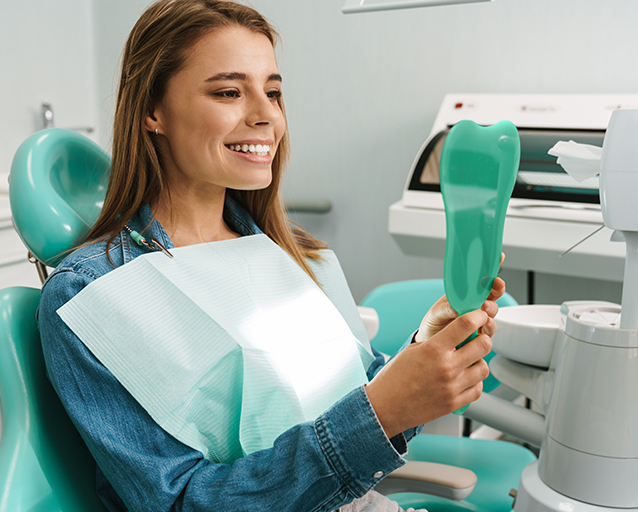
At any reputed oral health practice – like the Thousand Smiles Dental Clinic in London for example – during the initial appointment an effective and customised treatment plan is drawn out which uniquely caters to a patient’s individual needs. This treatment plan is based on extensive physical diagnosis along with digital photographs of the mouth and dental x-rays. On basis of the unique treatment plan braces are placed across the teeth and connected with arch wires. These orthodontic braces are basically brackets and the combination of these brackets and arch wire exerts constant pressure on the teeth to facilitate their movement or repositioning.
The brackets are either made up of metal or ceramic. Braces made of metal are obviously the strongest and those are also reputed for best performance. But ceramic braces are more preferred by the overwhelming majority of patients because these comparatively weaker appliances come in various colours and are aesthetically more pleasant. Once the braces are placed on the teeth a patient is most likely to visit the dentist regularly for adjustment of the braces and replacement of the bands explains an oral health professional who deals with various options of crowded teeth treatment over the years at Thousand Smiles Dental Clinic.
What is the duration of time a patient has to wear the braces? This depends on one’s unique treatment plan and your dentist will tell that to you way in advance. Usually kids need to wear braces a little lesser than adults. The other way around in severe cases patients need wearing braces for longer time. Once the braces are finally removed, one has to be on retainers to prevent a relapse or sinking back of the teeth into their original position. Usually retainers have to be worn for about a year although it varies from case to case and patient to patient depending upon several factors.
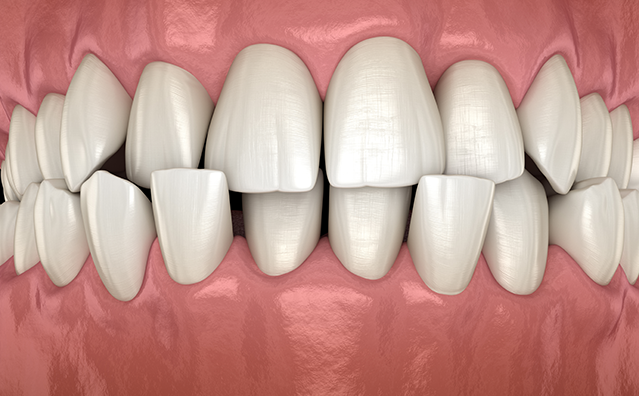
Orthodontic braces are meant for those whose teeth are out of alignment and are crowded. Before signing up for treatment with orthodontic braces it is important to have a mouth that is completely free from diseases. So if you suffer from dental conditions like tooth decay, gingivitis, gum decay or gum disease you must have those conditions cured first before you start wearing your braces. If these conditions are not treated first and left ignored, the condition for a patient can easily worsen during the journey with braces explains a dentist who provides treatment for crowded teeth at a reasonable cost in the UK over the years. It is important to mention in the ongoing context that children below the age 8 are not eligible for wearing braces. This is because their permanent teeth are still quite far away to come through.



